


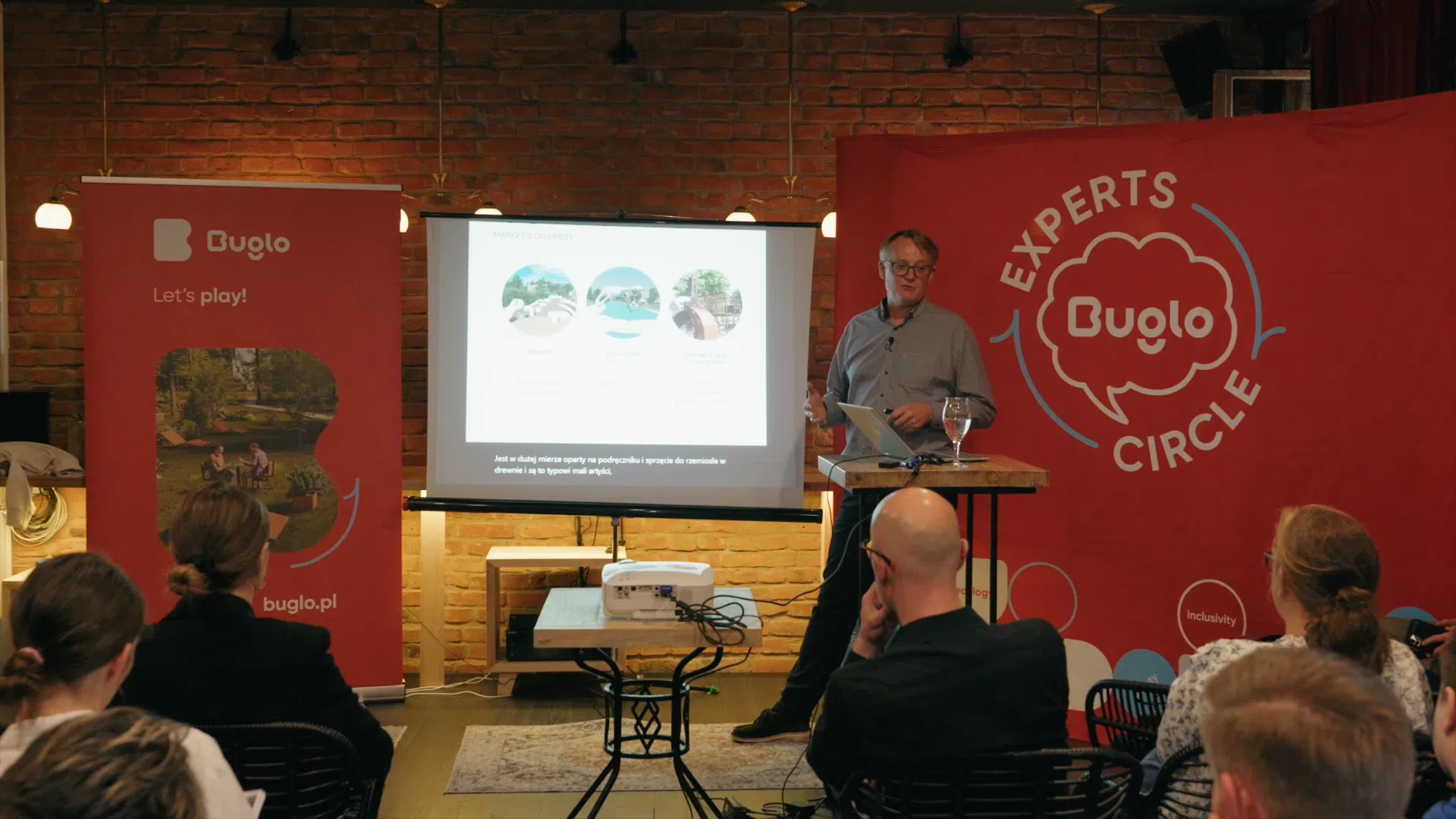
Jens Bo Thorsager, founder of the Danish company Elverdal and for many years actively involved in shaping play and leisure spaces across Scandinavia, visited us as part of the Buglo Experts Circle series. His experience shows that a successful playground begins not with the equipment, but with understanding the people, the place, and the emotions the space is meant to evoke.
Jens Bo pointed to three basic elements that guide the entire design process. These are the target group, the activities and the context.
The first step is to determine for whom we are creating the space. Children who are just beginning to develop their first motor skills need different conditions. Adults or seniors living nearby use the space differently. Each audience group has a different pace, different needs and different expectations.
When it comes to public spaces, it is important to design in an open and accessible way. Inclusivity should be one of the assumptions that appear at the beginning of a project. This creates places that can actually be used by all users.
The second foundation of design is determining what types of activities the space should support. Activities define functionality and influence whether people will enjoy spending time there. It’s worth considering what experiences visitors will be looking for. Is the space meant for rest, or for spontaneous movement? Should it encourage focus, or rather social interaction?
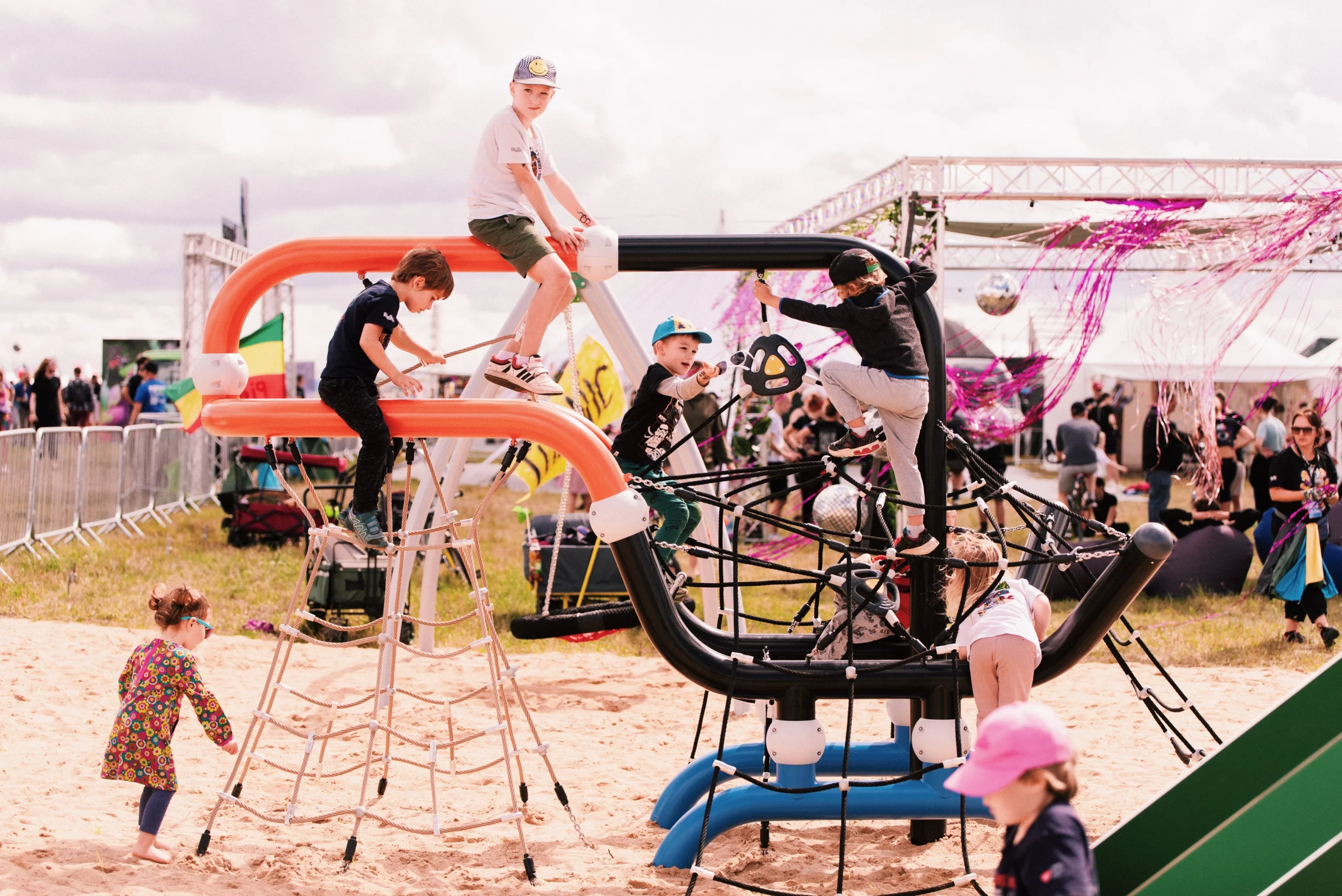
This approach naturally leads to the creation of different zones. These might include meeting areas where visitors can sit and talk. Other areas can support concentration, such as sandpits or educational panels. A separate zone can offer physical activity like climbing, running or balancing.
The choice of activities should always stem from real user needs. In a space used mainly by small children or older adults, a high structure will be neither practical nor safe. A design becomes truly effective when its activities match the abilities and expectations of those who will use it every day.
The third key element is context. The project cannot be created in isolation from the site. Each site has its own features, history and atmosphere, which are worth understanding and exploiting. Analysis of natural elements such as terrain, existing trees, open spaces and paths helps. Instead of hiding them, it is better to let them co-create the character of the project.
Context is also the story carried by the local community. It is useful to draw on the past functions of the area, significant events, local artists or heroes. This is a way to create a place that users will more quickly feel as their own. The space then acquires a recognizable identity and becomes part of a broader story, rather than a random collection of elements.
The meeting with Jens Bo Thorsager shows that designing playgrounds and other spaces requires sensitivity to people, activities and surroundings. When the target group is defined consciously, activities stem from real needs, and the context gives the space character, a place is created that people want to return to. Such places become a natural part of the local community’s life and can build a bond that does not age.